

Table of Contents
- Why sustainable gifts matter more than ever
- Sustainable gifts for nature lovers: quick comparison
- Gifts that support forest conservation: mushroom leather accessories
- Vegan Accessories for Nature Lovers: Hats, Bags, and Bracelets
- Eco-friendly outdoor gear for trails and water
- How we evaluated: sustainability standards and carbon footprint
- Which gift should you pick? A decision framework
- Final thoughts on thoughtful, practical Gifts
- Frequently Asked Questions
Last Updated: September 7, 2026
Finding a present that honors someone's deep connection to the outdoors without adding to the waste stream is a challenge. Sustainable gifts for nature lovers go beyond a simple water bottle or tote bag; they reflect a commitment to the planet that the recipient already shares. This guide from Amadou cuts through the generic eco-clichés to spotlight unique pieces that support conservation, use organic materials, and are built to last, not just sit on a shelf.
The most meaningful sustainable gifts for nature lovers are those with a transparent lifecycle, from ethically-sourced raw materials to a clear end-of-life plan. Many gifts marketed as "eco-friendly" still rely on synthetic blends or opaque supply chains. Below, we'll show you how to choose gifts that align with specific nature-based hobbies while minimizing carbon-footprint impact.
Why sustainable gifts matter more than ever
The shift toward conscious-consumerism has moved from a niche preference to a core expectation for many shoppers. When you choose a gift made from renewable-energy sources or upcycled materials, you are voting for a different kind of economy, one where environmental-impact is a primary design consideration rather than an afterthought.
This is especially true for those who spend their leisure time hiking, foraging, or observing wildlife. A nature lover is acutely aware of the fragility of the habitats they enjoy. Gifting an item that requires toxic chemicals to produce or sheds microplastics into waterways contradicts the very ethos of sustainable-living. The goal is to find practical-gifts that enhance their outdoor experience while ensuring the landscape remains pristine for future visits.
Sustainable gifts for nature lovers: quick comparison
To help you navigate the options, we have curated a selection of gifts that excel in specific areas. This comparison focuses on how each item supports a distinct aspect of an eco-conscious lifestyle, from trail performance to heritage craft.
Gift Category |
Best For |
Material & Sourcing |
Price Range |
|---|---|---|---|
Mushroom Leather Accessories |
Forest conservation supporters |
Wild-harvested Fomes fomentarius |
$25 - $215 |
Vegan Hats & Caps |
Sun protection & moisture-wicking |
Plant-based trama, organic linen |
$175 - $199 |
Patchwork Shoulder Bags |
Daily carry & style |
Organic mushroom leather |
$121 - $169 |
Fly Drying Patches |
Fly fishing enthusiasts |
Natural absorbent amadou |
$16 |
Optical Cleaning Sheets |
Tech users & photographers |
Chemical-free, biodegradable |
$16 |
Gifts that support forest conservation: mushroom leather accessories
Our top pick in the sustainable gifts category is the Amadou Bracelet at $25. This "Transylvanian forest charm" is crafted from the trama of the Fomes fomentarius fungus, a material so revered it is called "Forest Gold." Unlike synthetic vegan leathers that rely on plastic polymers, this accessory is 100% natural, hypoallergenic, and fully biodegradable.


What makes this a conservation gift is the harvesting method. The fungus is collected from wild Carpathian forests without killing the host tree, allowing the mycelium to regenerate. This supports forest health rather than depleting it. For a more substantial piece, the Amadou Legacy Hat at $195 offers the same sustainable pedigree, hand-shaped into a velvety, breathable headpiece that feels like premium suede while remaining 100% plant-based.

The forager hat / amadou legacy hat
Vegan Accessories for Nature Lovers: Hats, Bags, and Bracelets
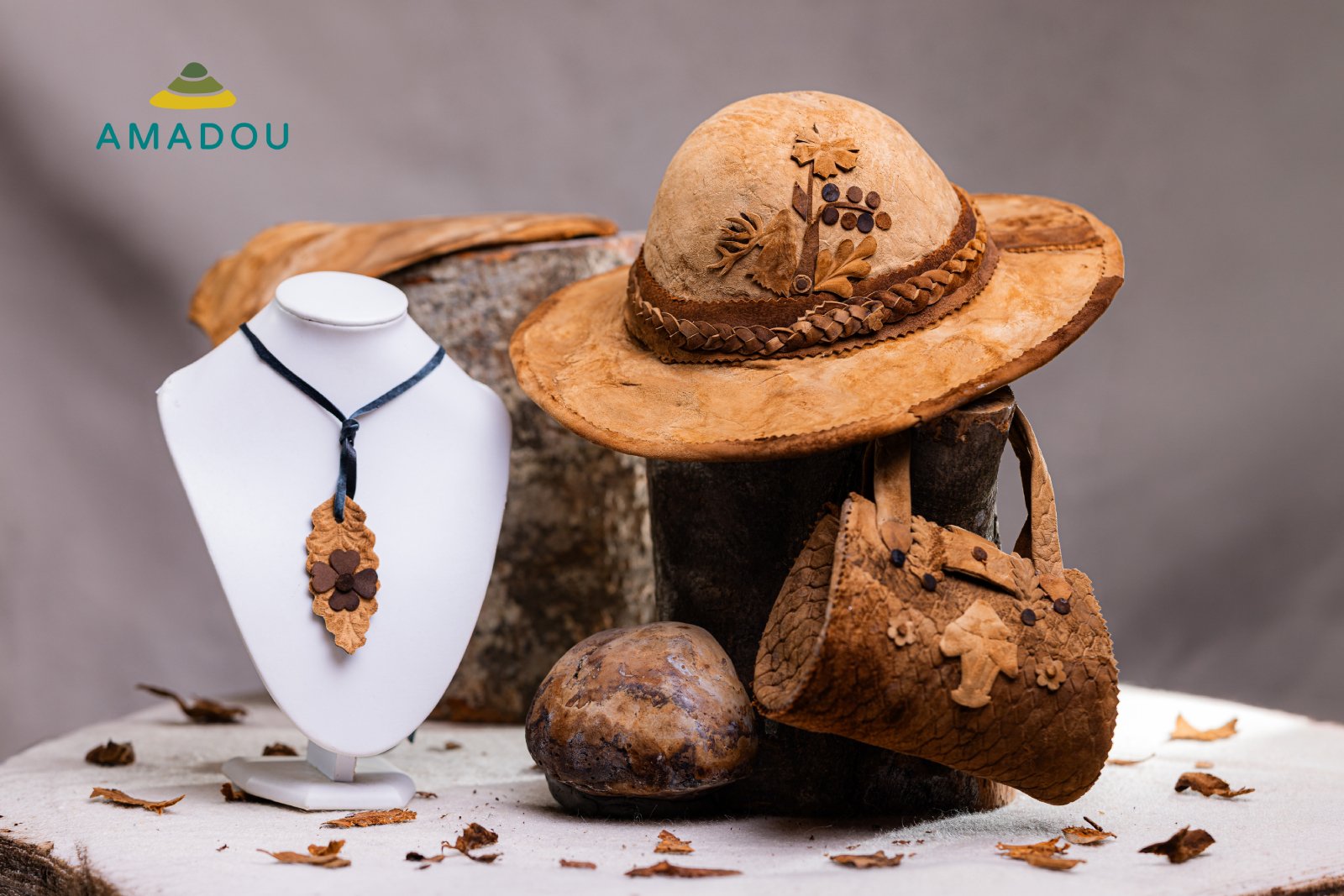
A flat lay of a mushroom leather hat, patchwork shoulder bag, and bracelet on a rustic wooden table, surrounded by forest moss and ferns, soft natural window light
For the fashion-conscious explorer, vegan accessories for nature lovers have historically meant sacrificing durability for ethics. Amadou changes that equation. The Patchwork Shoulder Bag at $169 is fully handcrafted with zero chemicals and lined with soft linen. Its unique sewing patchwork design ensures no two bags are identical, giving the recipient a one-of-a-kind piece of functional art.
The material itself is a performance textile. Because amadou is naturally moisture-wicking and breathable, the Docker Cap at $199 keeps the wearer cool in the sun and cozy in a breeze. These items are designed to develop unique character as they age, offering a tactile grounding experience that mass-produced gear simply cannot match.
Eco-friendly outdoor gear for trails and water
Most outdoor gear guides stop at 'recycled polyester' and call it a day. But for the nature lover who actually spends weekends on the trail or standing in a river, performance and end-of-life matter more than a green label. This section cuts through the noise by focusing on gear that solves a real problem for specific hobbies, and that you can compost when it finally wears out.
For the Fly Fisher: the problem with synthetic chamois
Fly anglers face a daily frustration: wet flies that won't cast properly. Most drying patches are made from synthetic chamois, a plastic-based material that absorbs water but also sheds microfibers into the very streams the angler is trying to protect. The Natural Amadou Fly Drying Patch at $16 solves this with a material that has been used for this exact purpose for centuries. Amadou's capillary structure pulls moisture away from the fly's hackles in seconds without crushing or bending them, which is critical for maintaining the fly's action on the water. When it finally gives out, you can toss it in the compost bin, not a landfill.
For the hiker: insulation without the bulk or the microplastics
Traditional hiking hats are either heavy wool (hot, itchy, slow to dry) or synthetic fleece (sheds microplastics with every wash). The Flat Cap at $215 offers a third path. Amadou's cellular structure traps air for insulation, but because the material is naturally breathable, it regulates temperature. On a sunny ridge, it wicks moisture away from the scalp; when the wind picks up at elevation, it blocks the chill without adding bulk. It also packs flat in a daypack, so it's there when you need it and out of the way when you don't. The material is naturally water-resistant, not waterproof, which is actually an advantage on the trail, since it won't trap sweat against your head the way a rubberized rain hat will.
The trade-offs You should know
No material is perfect. Amadou is not abrasion-proof, so it's not the right choice for bushwhacking through dense scrub. It also requires more care than a synthetic cap, you shouldn't machine-wash it or leave it in a damp pack for weeks. But for the nature lover who values gear that ages gracefully and returns to the earth, these trade-offs are part of the appeal. The hat will develop a patina over years of use, and when it's finally done, it breaks down completely without leaving microplastics in the watershed.
How we evaluated: sustainability standards and carbon footprint
Most gift guides tell you a product is 'eco-friendly' and move on. That's not good enough for a nature lover who actually tracks their impact. Here's the transparent framework we used to evaluate every item in this guide, and the specific lifecycle factors you should consider before buying any 'sustainable' gift.
The Four-Stage Lifecycle Assessment
We evaluated each product across four stages, using the EPA's sustainable materials management framework as our reference point:
1. Raw Material Sourcing Where does the material actually come from? For amadou, the answer is wild Carpathian forests, where the Fomes fomentarius fungus is harvested without cutting down the host tree. The mycelium regenerates, making it a renewable resource that requires zero irrigation, zero pesticides, and zero land conversion. Compare that to cotton, which is water-intensive, or conventional leather, which requires livestock and tanning chemicals. This is the stage where most 'green' claims are made, and where most greenwashing happens.
2. Production and Processing What happens between harvest and finished product? Amadou is processed using traditional boiling and hand-stretching methods that require no chemical inputs, no synthetic dyes, and no plastic binders. The finished material is 100% plant-based and naturally hypoallergenic. Many 'vegan leathers' fail this test because they're made from polyurethane (PU), a plastic that requires petroleum-based production and will not biodegrade.
3. Transportation and Packaging Amadou is naturally lightweight, which means lower shipping emissions per item compared to heavier alternatives like ceramic or glass goods. Our packaging is plastic-free and minimal, using recycled paper and cardboard. When you're evaluating other gifts, ask whether the brand offsets shipping emissions or uses carbon-neutral carriers, and be skeptical of heavy items shipped long distances that claim to be 'carbon neutral' without third-party verification.
4. Use and End-of-Life This is the stage most guides ignore. A gift that lasts 20 years has a lower lifetime carbon footprint than a cheap alternative replaced every two years, even if the cheap one is made from recycled materials. Amadou products are designed to last for decades with proper care. When they finally wear out, they are fully compostable at home. No microplastics, no special recycling facility required.
A Quick Carbon-Cost Comparison
To put this in perspective, consider the lifetime impact of three common gift categories:
Gift Type |
Production Inputs |
Lifespan |
End-of-Life |
|---|---|---|---|
Synthetic fleece jacket |
Petroleum-based plastic, energy-intensive |
3-5 years |
Sheds microplastics; landfill |
Conventional leather wallet |
Livestock, water, chrome tanning |
5-10 years |
Landfill; toxic tanning residues |
Amadou hat or accessory |
Wild-harvested fungus, boiling water |
10-20+ years |
Home compostable |
The FTC Green Guides are a useful reference for understanding what terms like 'biodegradable' and 'compostable' actually mean under federal law, and which marketing claims are legally actionable. The FTC explicitly warns against unqualified environmental claims, so if a brand won't tell you exactly what happens to their product at end-of-life, that's a red flag (the FTC).
Which gift should you pick? A decision framework
Choosing the right gift comes down to the recipient's specific nature-based hobbies. Use this framework to match the person with the perfect present.
- The Forager or Mycologist: Choose the Paul Stamets Favorite Mushroom Hat at $175. It celebrates the craft they love and is endorsed by a leading figure in mycology.
- The Avid Fly Fisher: The Fly Drying Patch is an essential tool they likely don't own yet, solving a daily frustration on the water.
- The Urban Naturalist: The Patchwork Bag or a Shoulder Bag at $135 brings a grounding, organic connection to the forest into their daily commute.
- The Minimalist: The Amadou Bracelet offers a subtle, tactile reminder of nature without adding bulk to their pack.
Final thoughts on thoughtful, practical Gifts
The best sustainable gifts for nature lovers solve a real problem while telling a story of heritage and renewal. They are not just objects but artifacts of a disappearing tradition, crafted to age beautifully.
Choosing Amadou means gifting a piece of the forest that supports a circular-economy and preserves an ancient artisanal craft from the Carpathian mountains. Whether they are cleaning a camera lens with a natural optical sheet or wearing a weightless hat on the trail, your recipient will experience the difference that true craftsmanship and organic materials make. These pieces offer a soft, breathable alternative to heavy felt and synthetic gear, providing comfort and utility that deepens their nature-connection.
Frequently Asked Questions
Are mushroom-based accessories considered sustainable gifts?
Yes, when sourced from wild-harvested Fomes fomentarius, as Amadou does. The material is 100% biodegradable, vegan, and chemical-free, unlike plastic-based vegan leathers. Because artisans handcraft each piece without toxic processing, the carbon footprint is minimal. Look for brands that harvest responsibly from wild forests without harming living trees, and that produce in small batches. A mushroom leather hat or bracelet makes a unique, low-impact gift that also supports a vanishing craft tradition.
What should I look for when buying ethical gifts for hikers and campers?
Prioritize items made from organic, biodegradable, or upcycled materials that can handle moisture and repeated use. For outdoor gear, check that the brand uses ethical labor and avoids toxic coatings. A natural amadou fly-drying patch, for example, is highly absorbent, drying flies in seconds without chemicals. Also consider the product's end-of-life disposal: choose items that can be composted rather than sent to a landfill.
How can I choose eco-friendly gifts that support environmental conservation?
Choose gifts from companies that directly fund habitat protection or use materials harvested in ways that preserve forest ecosystems. Amadou's mushroom leather is wild-harvested from the Fomes fomentarius fungus without cutting down trees, and every purchase helps keep an ancient Transylvanian craft alive. Look for transparent supply chains and brands that state their conservation practices clearly. Avoid gifts with excessive packaging, and opt for durable items that will not need replacing, reducing the overall environmental impact.
What is the best sustainable gift for someone who loves nature?
The best gift depends on the recipient's habits. For a fly fisher, a natural amadou fly-drying patch at $16 is a practical, highly effective tool. For a style-conscious hiker, a Paul Stamets favorite mushroom hat at $175 offers moisture-wicking comfort and a unique heritage story. If they value minimalist elegance, the Transylvanian forest charm bracelet at $25 is an affordable conversation starter. Focus on items that support their specific outdoor hobbies and align with a zero-waste lifestyle.
How do mushroom leather hats perform as eco-friendly outdoor gear?
The material is naturally breathable, moisture-wicking, and lightweight, keeping you cool in the sun and warm in a breeze. Unlike felt, amadou does not retain sweat, and it packs down easily for travel. The velvety texture feels like premium suede but remains 100% plant-based. Each hat is hand-shaped from wild forest material, offering durability that improves with age, developing a unique patina over years of outdoor use.
Finding a gift that is both practical and principles-driven is the ultimate challenge for the eco-conscious shopper. Amadou answers this by transforming the Fomes fomentarius fungus into luxurious, durable accessories that support conservation rather than exploitation. Explore the collection of hats, bags, and bracelets to find a gift that honors both the recipient and the wild places they love. Get started with the amadou collection and give a gift that carries the soul of the forest.