

Table of Contents
- Why Premium Vegan Leather Alternatives Deserve a Second Look
- Quick Comparison: Top Vegan Leather Alternative Brands
- 1. Stella McCartney: Luxury Pioneer with Bio-Based Innovation
- 2. von Holzhausen: Material Science for the Modern Professional
- 3. Angela Roi & Freja New York: Structured Classics with Ethical Roots
- 4. HFS Collective & SteamLine Luggage: Purpose-Built for Travel
- 5. Amadou: The Artisanal Mushroom Leather Accessories Standard
- How to Identify High-Quality Vegan Leather Before You Buy
- Frequently Asked Questions
Last Updated: September 5, 2026
Why Premium Vegan Leather Alternatives Deserve a Second Look
The market for premium vegan leather alternatives has moved far beyond the stiff, shiny polyurethane (PU) materials that gave plant-based accessories a bad name decades ago. Today, material scientists and luxury houses are engineering bio-based fabrics from mycelium, mango waste, and apple skin that rival animal hide. At Amadou, we have worked directly with the trama of the Fomes Fomentarius mushroom and watched this category transform from a niche compromise into a genuine luxury standard.
A common misconception is that vegan leather is a single material. In reality, the term spans everything from petroleum-based synthetics to next-generation bio-leathers grown from fungi. This distinction matters enormously for durability, chemical safety, and end-of-life circularity.
Below, we break down the brands setting the standard for ethical fashion in 2026, what makes their materials different, and how to spot quality before you buy.
Quick Comparison: Top Vegan Leather Alternative Brands
The table below adds two dimensions most roundups ignore: chemical safety (phthalate/PVC status) and end-of-life circularity. These factors determine whether a "premium" price buys durability and environmental responsibility or just a well-marketed plastic product.
Brand |
Starting Price |
Material Focus |
Chemical Safety Notes |
End-of-Life Pathway |
Best For |
|---|---|---|---|---|---|
Amadou |
Check website |
Fomes Fomentarius mushroom trama (naturally occurring, not lab-grown) |
No PU, PVC, or phthalates; naturally occurring plant-based textile |
Home-compostable; fully biodegradable without industrial facilities |
Artisanal, heritage-driven accessories with genuine circularity |
Stella McCartney |
$800+ |
Mylo mycelium (lab-grown), bio-based PU blends |
Mylo is phthalate-free; some bags use bio-based PU that varies by collection |
Limited; check specific product for recycling guidance |
High-fashion luxury investment pieces |
von Holzhausen |
$295+ |
Technik-Leather (proprietary performance fabric) |
PFAS-free, phthalate-free formulation; MSDS available on request |
Brand take-back program for recycling; not home-compostable |
Durable, sleek professional work bags |
Angela Roi |
$200+ |
EPUL vegan leather (proprietary PU-based) |
PU-based; brand states non-toxic but does not publish full MSDS |
No take-back program; treat as recyclable via specialty textile recycling |
Structured, classic handbag silhouettes |
Freja New York |
$150+ |
Non-toxic sustainable vegan leather (PU blend) |
Brand states non-toxic; no PVC; phthalate status not publicly disclosed |
No formal take-back program |
Minimalist everyday carry |
HFS Collective |
$250+ |
Apple leather (apple fiber + PU), recycled bottles |
PU blend with apple fiber; no PVC; phthalate status not disclosed |
Recycled polyester backing is recyclable; apple-PU blend requires industrial recycling |
Travel and hands-free crossbody bags |
SteamLine Luggage |
$450+ |
PFAS-free, non-toxic materials (proprietary blend) |
PFAS-free, phthalate-free; full material transparency on request |
No take-back program; designed for multi-decade lifespan |
Vintage-inspired luxury travel cases |
What This Table Reveals That Other Roundups Miss
Three patterns emerge when you compare brands on chemical safety and circularity rather than just aesthetics:
1. The price-to-circularity gap is real. The most expensive brands (Stella McCartney, SteamLine) do not necessarily offer the most sustainable end-of-life pathway. Amadou, at a lower price point, is the only material in this list that is genuinely home-compostable because it is a naturally occurring plant-based textile rather than a synthetic composite.
2. "Non-toxic" is not a regulated term. Freja and Angela Roi both use "non-toxic" in their marketing, but neither publishes a complete material safety data sheet. Under U.S. law, this claim is not independently verified (the FTC). Compare that to von Holzhausen, which provides an MSDS on request, or SteamLine, which explicitly documents PFAS-free and phthalate-free formulations.
3. The bio-based percentage matters more than the brand story. HFS Collective's "apple leather" sounds more sustainable than Angela Roi's "EPUL," but both are primarily PU blends with plant fiber added. The apple content in HFS's material is a minority component by weight. Neither offers the full bio-based composition of Amadou's mushroom trama.
1. Stella McCartney: Luxury Pioneer with Bio-Based Innovation
Stella McCartney remains the benchmark for luxury alternatives because the house refuses to compromise on silhouette or drape. As a pioneer in cruelty-free fashion, the brand operates a strict no-leather, no-fur, and no-skin policy while experimenting with materials like Mylo mycelium leather.
The trade-off is price. With bags starting around $800, this is an investment tier purchase. What you gain is high resale value and construction engineered to last. For consumers who want the cachet of a designer label aligned with their ethics, Stella McCartney is the safest entry point.
2. von Holzhausen: Material Science for the Modern Professional
von Holzhausen approaches vegan leather from a materials-engineering perspective. The brand's proprietary Technik-Leather is a 100% animal-free, sustainable performance fabric designed to outlast standard PU options. It is water-resistant, stain-resistant, and lightweight, making it practical for professionals who commute daily.
The minimalist, architectural design appeals to those who prefer understated function over logos. Starting at $295, the price reflects superior material durability. The main limitation is a narrow color palette. For a work bag that must endure rain and daily wear while looking sharp, this is the strongest contender.
3. Angela Roi & Freja New York: Structured Classics with Ethical Roots
If your preference leans toward traditional, structured handbags, Angela Roi delivers classic silhouettes that mimic luxury leather goods. The brand uses high-grade EPUL vegan leather and hand-crafts each piece, with pricing from $200. The construction quality, including hardware, is excellent for the price point. These bags are heavier than newer bio-material options, but offer a reassuring sturdiness.
Freja New York takes the opposite approach with a focus on "quiet luxury." Their non-toxic, sustainable vegan materials and logo-free designs target the minimalist consumer. Starting at $150, Freja offers an excellent price-to-quality ratio for everyday carry. The catch is frequent sell-outs; small-batch production means popular styles disappear quickly.
4. HFS Collective & SteamLine Luggage: Purpose-Built for Travel
Travel demands different performance criteria than a city handbag, and HFS Collective addresses this with materials like apple leather and recycled plastic bottles. Their belt bags and crossbody styles are designed for hands-free movement. Starting at $250, the durability is solid, though the selection skews smaller.
SteamLine Luggage occupies the premium end of travel with vintage-inspired cases. The brand uses PFAS-free and non-toxic materials and builds to a high-durability standard for frequent flyers. At $450 and up, this is a statement purchase. The standout design is the primary draw, but the quality of components justifies the premium.
5. Amadou: The Artisanal Mushroom Leather Accessories Standard
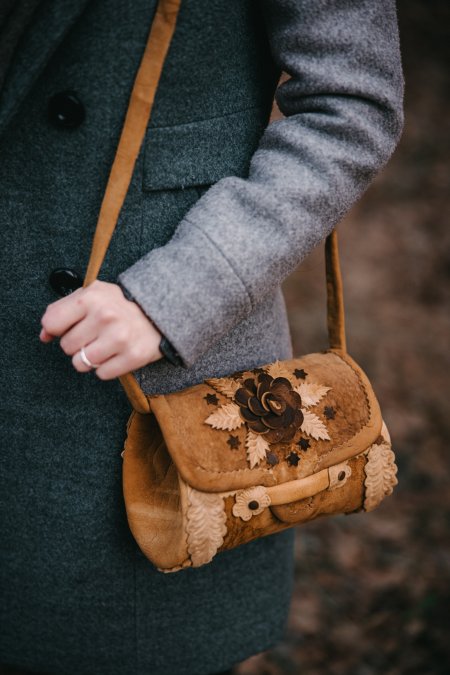
Close-up of hands holding a soft, textured brown amadou mushroom leather bag, natural light, forest background softly blurred
Our top pick is Amadou, and not simply because it is our own craft. Amadou preserves a vanishing tradition by working with the unique trama of the Fomes Fomentarius mushroom, a material humans have used for millennia. This is not a synthetic imitation of leather; it is a naturally occurring, plant-based textile that is weightless, moisture-wicking, and breathable. Unlike coated plastics, amadou develops a unique character as it ages, taking on a patina that records your history with the piece.
The material is also naturally absorbent, giving it a dual purpose. The fibers lift oils and smudges from screens without chemicals. For the conscious explorer, an Amadou hat keeps you cool in the sun and cozy in the breeze. This is the standard for artisanal mushroom leather accessories, preserving a rare heritage craft while delivering a product that performs.
How to Identify High-Quality Vegan Leather Before You Buy
Most buying guides stop at "check the backing" or "smell the material." That advice misses the real problem: the term "vegan leather" legally tells you nothing about what is actually in the product. In the United States, the FTC's Green Guides prohibit deceptive environmental marketing claims but do not define "vegan leather" or require any minimum bio-based content (the FTC). That regulatory gap means a brand can sell a bag that is 90% polyurethane with a thin plant-based coating and call it "apple leather" without breaking any rule.
Decode the Material Breakdown, Not the Label
The single most important question to ask is: What is the percentage of bio-based content by weight? A genuinely premium bio-based material will disclose this number because it is a selling point. If a brand cannot or will not answer, assume the product is primarily synthetic. Common patterns to look for:
- PU (polyurethane) with a bio-based topcoat: The base layer is petroleum-derived plastic. The bio content is often 10-20% by weight. This is the most common greenwashing structure in the market.
- PU blended with plant fibers: Apple, mango, or cactus fibers mixed into a PU matrix. Bio content typically ranges from 30-50%. Better than a topcoat, but still plastic-heavy.
- Fully bio-based or naturally occurring materials: Amadou mushroom trama, pure cork, or mycelium composites with minimal synthetic binders. These are the only materials that offer genuine end-of-life options like home composting or biodegradation.
Ask About the Plasticizer and Phthalate Load
The durability problem with most vegan leathers is not the base material, it is the plasticizers added to make it flexible. Standard PU formulations rely on phthalates or other plasticizers that migrate to the surface over time, causing the material to stiffen, crack, and peel (PubMed). This is why a $100 vegan handbag often disintegrates within 18 months while a well-constructed bio-based piece lasts for years.
When evaluating a product, ask the brand directly: "Does this material contain phthalates or ortho-phthalates?" Brands using premium formulations will answer clearly. Brands hiding behind proprietary names like "Technik-Leather" or "EPUL" should provide a material safety data sheet (MSDS) on request. If they cannot, that is a red flag.
The Three-Point Physical Inspection
Beyond the chemical questions, a 60-second physical inspection reveals more than any marketing page. Use this checklist:
- The pinch test: Pinch the material between your thumb and forefinger and twist gently. A premium bio-based leather will show fine, tight creases that relax back. A plastic-heavy material will show broad, white stress marks or feel rubbery.
- The edge test: Look at the cut edge of the material, not the finished surface. High-quality vegan leather has a visible fabric or knit backing that is tightly bonded. If the edge shows a single homogeneous plastic layer with no backing, the material will likely peel within a year of daily use.
- The heat test (safe version): Hold the material a few inches from a warm light bulb for 10 seconds, then smell it. A strong chemical or "new car" odor indicates volatile organic compounds (VOCs) off-gassing. Premium bio-based materials like amadou or cork should produce little to no odor.
The Greenwashing Audit: What to Ask Before You Pay a Premium
Before spending over $200 on any vegan leather product, request the following in writing from customer service:
- Exact percentage of bio-based content by weight
- Presence or absence of phthalates and PVC
- Country of manufacturing and tanning/dyeing process
- End-of-life instructions (recyclable? compostable? take-back program?)
Brands that cannot answer these four questions are not selling premium materials, they are selling marketing. The premium tier of this market, including Amadou, von Holzhausen, and SteamLine, will answer all four without hesitation because their material science is the product. If you get vague language or a redirect to a sustainability page, treat that as the answer and move on.
Frequently Asked Questions
Which vegan leather is considered the highest quality?
The highest quality vegan leather alternatives are typically bio-based materials like mycelium (mushroom) leather and advanced plant-based options, rather than standard polyurethane. Brands like Stella McCartney use Mylo mycelium, while Amadou crafts accessories directly from Fomes Fomentarius trama for a unique texture. Look for materials labeled bio-based or next-gen; they often offer better breathability and a more natural feel. Avoid cheap PU blends, as they tend to peel and crack faster. Focus on the material composition over marketing terms like 'vegan leather' alone.
What is the most durable type of vegan leather?
Durability varies widely. von Holzhausen's Technik-Leather is engineered for water and stain resistance, making it a strong performer for daily work bags. Angela Roi's EPUL is another high-grade option known for holding its structure. For plant-based options, mycelium and apple leather offer good durability when properly cared for, though they may require more attention than synthetics. Check the backing material and stitching quality, as these often determine lifespan more than the top coat. Always review care instructions before purchasing.
Is mushroom leather considered a premium material?
Yes, mushroom leather is increasingly viewed as a premium material due to its complex production process and sustainability profile. Brands use mycelium to create textures that closely mimic animal leather, and artisanal makers like Amadou use the trama of Fomes Fomentarius directly. Its premium status comes from the fact that it is bio-based, cruelty-free, and often biodegradable, which appeals to luxury consumers. However, quality varies by brand. Look for established names and transparent production methods to ensure you are getting true craftsmanship rather than a novelty item.
How can I tell if a vegan leather bag will last?
Start by examining the material composition. If it is purely polyurethane, it may be less durable than bio-based options. Ask the brand about the base material and any protective coatings. Check the stitching: tight, consistent seams indicate better construction. Look at the hardware, zippers, and edges for signs of quality finishing. Finally, read reviews that mention wear after several months of use. Brands like von Holzhausen and Angela Roi are known for durable construction, but always confirm the specific care requirements to extend the life of your bag.