

Table of Contents
- What Is Mycelium Leather and Why It Matters
- How Is Mushroom Leather Made
- Mycelium Leather Durability: Real-World Performance
- Luxury Mushroom Leather Accessories: The Amadou Collection
- Care, Maintenance, and End-of-Life Biodegradability
- Environmental Benefits and Circular Economy Impact
- Frequently Asked Questions
Last Updated: September 19, 2026
What Is Mycelium Leather and Why It Matters
Mycelium leather is a bio-fabricated material grown from the root structure of fungi, specifically the Fomes fomentarius mushroom. Unlike traditional leather or synthetic alternatives, mycelium-based materials offer a genuinely sustainable option that doesn't require animal farming or petroleum-derived polymers. This represents a meaningful shift in how we think about luxury accessories and everyday gear.
Mycelium leather is genuinely vegan, and biodegradable at end-of-life. It performs like premium suede while remaining breathable and moisture-wicking, developing unique character as it ages without the environmental cost or ethical concerns of animal leather.
Among mushroom leather brands, Amadou has demonstrated that this material delivers durability, tactile quality, and longevity that rivals traditional materials, it's not a compromise product.
How Is Mushroom Leather Made
Mycelium is cultivated on agricultural byproducts like hemp or sawdust, creating a dense mat of root-like fibers in weeks, faster than animal leather tanning and without synthetic chemicals.
Artisans harvest the trama (the inner fungal layer) and process it through boiling, stretching, and drying using traditional techniques from Corund, entirely chemical-free, relying on heat, water, and hand-shaping.
The Fiber Structure and Tactile Reality
What distinguishes mycelium leather at the microscopic level is its fiber alignment. Unlike animal leather, which has a random collagen matrix, or synthetic alternatives, which rely on petroleum-based polymers, mycelium leather is composed of chitin fibers, the same structural material found in insect exoskeletons. These fibers naturally orient along the direction of fungal growth, creating a grain pattern similar to wood. This alignment is why the material resists tearing and maintains structural integrity under stress.
Mycelium leather is firmer than suede, more structured than felt, and lacks the plasticky feel of polyurethane vegan leather. It's breathable, air passes through the fiber matrix rather than being trapped against a polymer coating, so Amadou pieces don't develop the clammy feeling that synthetics do during extended wear.
Color variation is structural: mycelium grown on agricultural waste creates natural ranges from pale cream to deep tan, with darker striations where the fungus colonized more densely. Each piece is genuinely unique.
Why Hand-Stretching and Drying Matter
Stretching and drying determine final properties. Unlike industrial leather tanning, mycelium relies on mechanical stretching and heat to set structure, no chemical shortcuts. Artisans monitor moisture, tension, and temperature to prevent brittleness.
The handcrafted nature means no two pieces are identical, each carrying natural color variations and texture.
Mycelium-based materials research from academic biotechnology journals has documented how this bio-fabrication approach requires significantly less water and land than conventional leather production, while generating zero toxic runoff.
Mycelium Leather Durability: Real-World Performance
Mycelium leather holds up remarkably well in practice, resisting moisture better than felt and maintaining structural integrity with regular use and exposure to elements.
Amadou accessories retain their shape and texture after months of daily wear.
Mycelium leather's natural fiber alignment resists tearing and won't develop permanent wrinkles like cheaper substitutes. Instead, it develops a patina, subtle darkening and softening that signals authenticity.
Mycelium leather requires air drying if wet, but with basic maintenance these pieces last for years.
Luxury Mushroom Leather Accessories: The Amadou Collection
Amadou focuses on heritage craftsmanship, with every piece handmade in Corund using techniques passed down through generations, preserving artisanal tradition while creating products that perform.
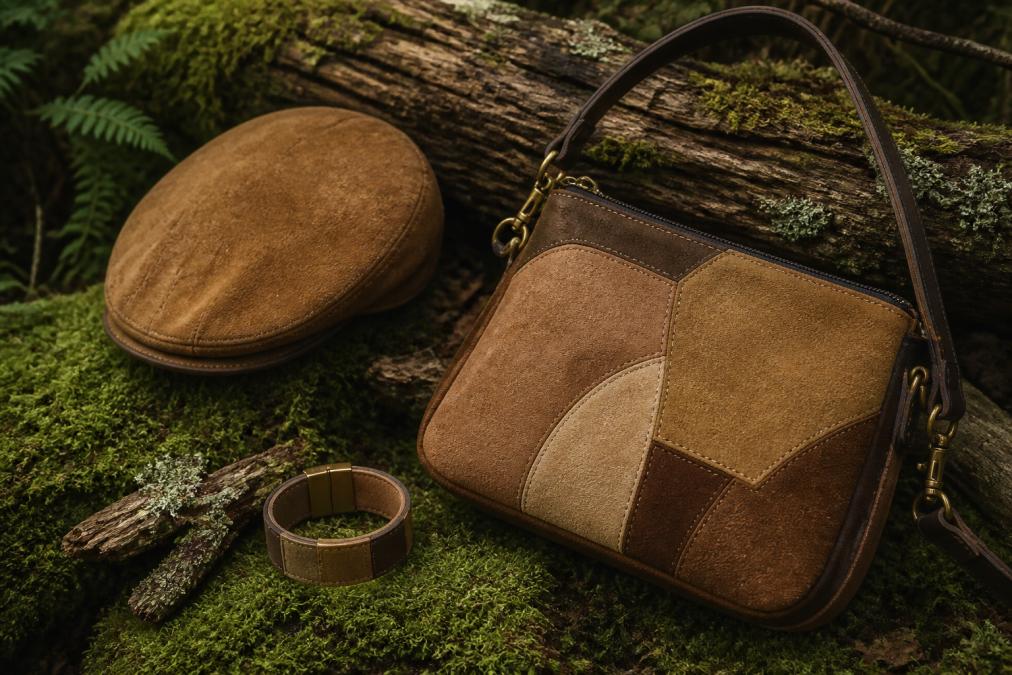
Caps and Hats for Every Style
The Amadou flat cap ($215) combines British aesthetics with modern functionality, lightweight, breathable, and stretchable enough to fit various head sizes.
The Amadou docker cap ($199) features adjustable design for outdoor use.
The Amadou baseball cap ($175) and Forager hat ($195) offer contemporary silhouettes with natural color variation ensuring each piece is genuinely unique.
The Big rim heritage hat ($195) and Fedora ($185) develop a subtle patina with age, becoming more distinctive over time.
Shoulder Bags and Purses
The patchwork shoulder bag ($169) uses visible hand-stitching and varied patches for visual interest and structural integrity. Lined with soft linen and sized for everyday carry.

The legacy shoulder bag ($135) offers larger capacity with moisture-wicking properties suitable for humid conditions.

The legacy shoulder purse ($98) provides compact carry at an accessible price point for testing the material.

Statement Bracelets
The Amadou bracelet ($25) is the entry point to mycelium leather, functioning as both accessory and conversation starter about sustainable materials.
The hypoallergenic properties matter for sensitive skin, zero chemicals, chrome, or plastics make it safe for extended wear.
Care, Maintenance, and End-of-Life Biodegradability
Proper care extends the life of mycelium leather significantly.
Daily and Routine Care
Mycelium leather should not be machine washed or submerged. If damp, air dry in a well-ventilated space.
For routine maintenance, a soft brush removes surface dust. If the material accumulates oils or smudges, a slightly damp cloth (not wet, the cloth should feel cool but not dripping) works without damaging the fibers. Wring out excess water before applying to the material. The key is avoiding saturation and heat sources like direct sunlight or radiators, which can cause the material to become brittle or develop cracks.
If the material does get saturated, say, caught in heavy rain, don't panic. However, do not use heat to dry it faster. No hair dryers, no radiators, no direct sun. This accelerates moisture loss unevenly and can warp the material. Instead, lay it flat or hang it loosely and allow 48-72 hours for complete drying.
Storage and Seasonal Care
Store mycelium leather in a cool, dry place. Avoid plastic bags, which trap moisture and can promote mold. Paper or cloth storage is better.
During winter months or in damp climates, check stored items monthly. If you notice any soft spots or discoloration, remove the item and air it out immediately.
What Mycelium Leather Cannot Handle
Avoid prolonged exposure to extreme heat. Do not use leather conditioners designed for animal leather. Do not apply waterproof coatings or sealants; these defeat the purpose of the breathable material and trap moisture against the surface.
The material is not suitable for items that require frequent washing. If you need a sustainable material for high-moisture environments, mycelium leather is better than synthetic alternatives but not ideal for constant saturation.
End-of-Life Biodegradability: The Reality
Unlike synthetic materials that persist for decades in landfills, mycelium leather is genuinely biodegradable. However, the biodegradability depends on how the material was finished and what binders were used during manufacturing.
Pure mycelium leather with minimal synthetic binders will decompose in a home compost pile within 6-12 months, breaking down into organic matter that enriches soil. This is a genuine circular-economy advantage.
Industrial composting standards and facility locators can help you find composting options in your area if you want to ensure your mycelium leather items return to the soil at end-of-life.
Environmental Benefits and Circular Economy Impact
The circular economy benefit extends beyond biodegradability.
Life cycle assessment studies on mushroom-based materials document that mycelium leather production generates negligible greenhouse gas emissions compared to both animal leather and synthetic alternatives. The material sequesters carbon during growth, then releases it gradually during decomposition, a natural cycle rather than industrial pollution.
| Product Type | Price Range | Best For | Key Feature |
|---|---|---|---|
| Hats | $175-$215 | Outdoor use, everyday wear | Lightweight, breathable, moisture-wicking |
| Bags | $98-$169 | Travel, daily carry | Durable structure, chemical-free linen lining |
| Bracelets | $25 | Entry-level, sensitive skin | Hypoallergenic, minimalist design |
Frequently Asked Questions
Is mushroom leather actually durable compared to real leather?
Mushroom leather, particularly amadou from Fomes fomentarius, offers durability comparable to premium suede and felt. The material's stretchable, resilient fibers resist tearing and maintain their shape through regular wear. Unlike some eco-friendly alternatives, amadou develops character over time rather than deteriorating, aging gracefully with visible patina that adds to its aesthetic appeal. The key difference: it requires different care than animal leather, no water exposure or harsh chemicals, but when maintained properly, amadou accessories last for years.
What makes mycelium leather durability superior to synthetic vegan alternatives?
Mycelium leather like amadou is a bio-fabricated material. This approach produces material that breathes, adjusts to temperature, and resists degradation from moisture and sweat. The absence of chemical binders means no delamination or peeling. Amadou maintains tensile strength, making it genuinely suitable for travel gear, not just fashion.
How is mushroom leather made, and why does the process matter?
Amadou mushroom leather begins with wild harvesting of Fomes fomentarius from forests, then undergoes traditional boiling, stretching, and hand-shaping by artisans. This chemical-free process preserves the fungal trama's natural structure. The final product is hypoallergenic and completely biodegradable.
Why is Amadou considered a luxury mushroom leather brand?
Amadou preserves an ancient Transylvanian craft on the verge of extinction, with each piece handcrafted by master artisans in Corund. The brand sources wild Fomes fomentarius from the Carpathian forests and applies zero-chemical processing, resulting in accessories that feel like premium suede yet remain fully vegan and biodegradable. Pricing reflects genuine artisanal labor and sustainable sourcing: shoulder bags range from $98-$169, caps from $175-$215, and bracelets at $25. The uniqueness, no two pieces are identical due to natural variation, positions amadou as a luxury alternative to mass-produced vegan leather.
What are the environmental benefits of choosing mushroom leather over synthetic vegan alternatives?
Mushroom leather eliminates the water consumption, greenhouse gas emissions, and microplastic pollution associated with petroleum-based synthetic vegan leathers. Mycelium grows on agricultural waste, requiring minimal land use and no pesticides or fertilizers. The material is carbon-neutral to carbon-negative when harvested from wild fungi. Amadou is fully biodegradable. The bio-fabrication process uses no toxic chemicals, eliminating water contamination from tanning effluent.