

Last Updated: November 16, 2026
Quick Summary
Amadou is the better pick for festival comfort in heat and breeze, since it is lighter and breathes well, and it develops character as it ages. Felt suits anyone who wants a rigid, structured shape that holds its form in strong wind. For a long, hot afternoon outdoors, a mushroom hat made of amadou usually feels cooler and lighter than felt.
- Amadou is very light and breathes well in heat and breeze.
- Amadou develops a patina and character as it ages, while felt shows flattening and pilling.
- Felt holds a crisp, structured shape better than amadou.
- Felt warms up faster in direct sun and suits windy, exposed ground.
- Amadou hats range from $185.00 to $220.00 in the collection.
Table of Contents
- How Each Material Ages Over a Festival Season
- Sun Protection and Ventilation in Real Festival Conditions
- Weight, Fit, and All-Day Stability
- Mushroom Hat Care: Keeping Amadou Looking Its Best
- Pricing and Value: Amadou Hat Options Side by Side
- Choosing Your Festival Hat and Your Next Step
- Frequently Asked Questions
Choosing a festival hat in the United States usually comes down to one question: which material will keep you comfortable in the sun and breeze, and still look right after a few weeks of wear? Amadou, the velvety material made from the Fomes fomentarius fungus, is one answer. Felt is the other. Amadou hats are often described as lighter and more breathable than felt, and they develop a character that felt rarely matches. Felt has its strengths too, and this guide covers both fairly.
Amadou is the trama of the Fomes fomentarius mushroom, hand-shaped into a hat that feels closer to premium suede than to stiff wool. Felt is wool or fur fibers pressed and matted together, the classic material behind most festival and fedora-style hats. The two behave very differently once they meet heat, sweat and a long day outside.
Here is the short version. Amadou is lightweight and breathable. Felt holds a crisp shape and tends to sit more structured on the head. Amadou takes on a patina as it ages, while felt shows wear more as fibers flatten or pill. If you spend long afternoons in direct sun, the comfort difference is the one most people notice first.
| Factor | Amadou Mushroom Hat | Felt Festival Hat |
|---|---|---|
| Weight | Very light, feels almost weightless | Heavier, more structure |
| Breathability | Breathes well in heat and breeze | Warms up faster in sun |
| Aging | Develops patina and character | Shows flattening and pilling |
| Shape retention | Softer, flexible brim | Holds a crisp shape |
| Care | Brush and air out | Needs more careful shaping and storage |
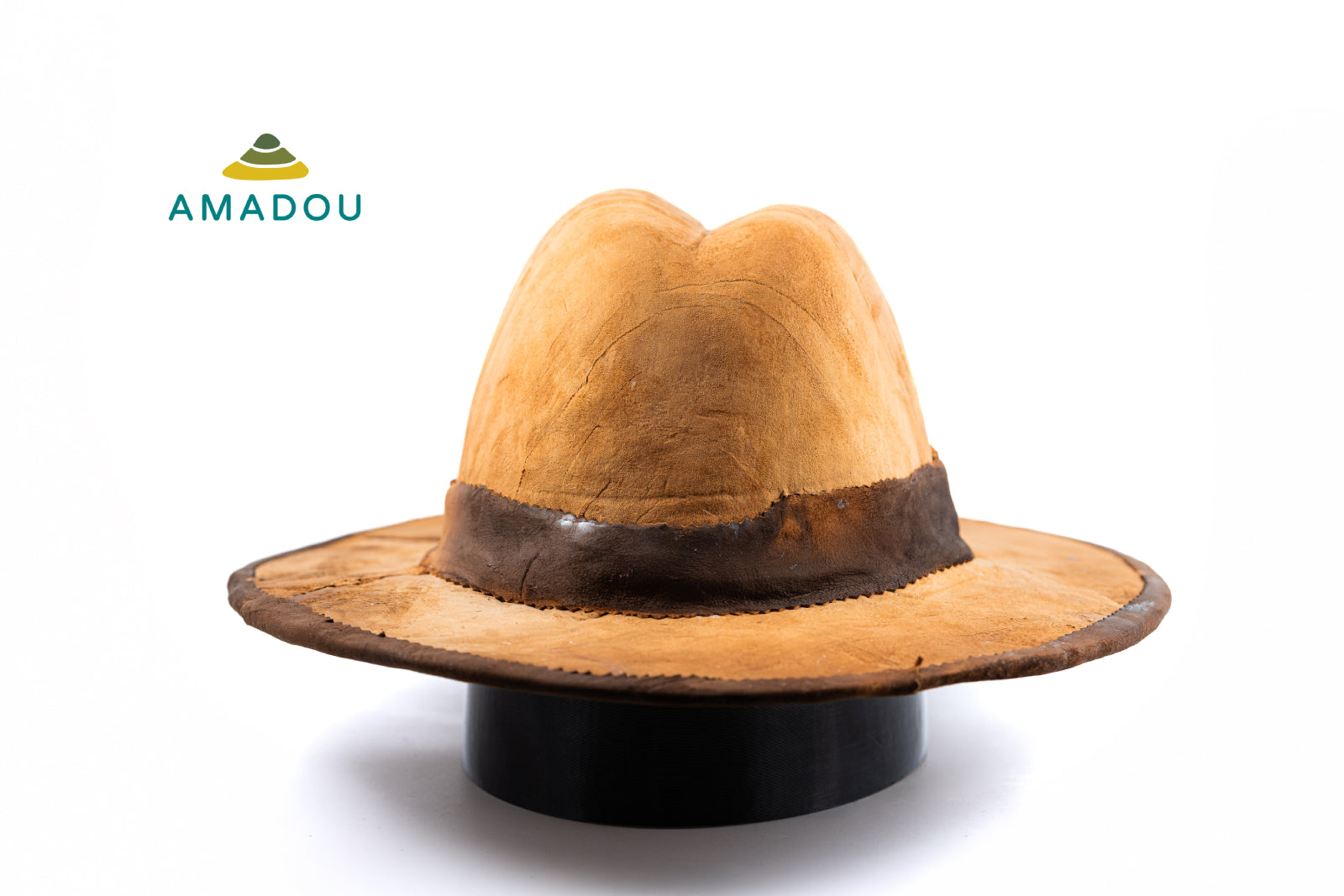
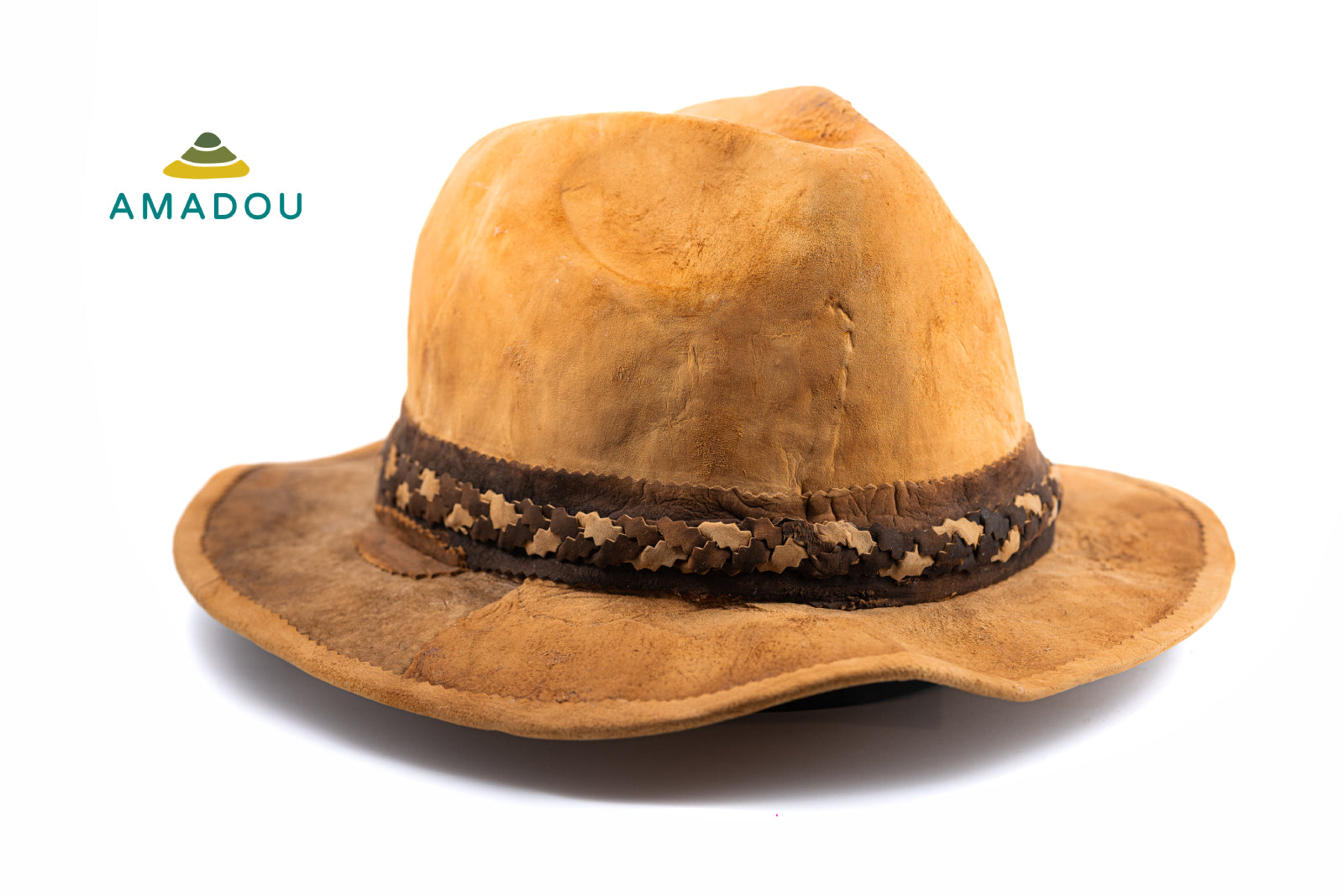
Our Big Rim Hat / Heritage Amadou Hat ($195.00) and Bucket Amadou Hat ($220.00) are the places to start if comfort is your priority. For a classic silhouette, the Fedora Amadou Hat ($185.00) gives the look of a felt fedora with the lighter feel of amadou.
How Each Material Ages Over a Festival Season
Aging is where the two materials split most clearly. An amadou hat darkens and softens with handling and sun, building a patina that makes each piece look more personal over time. Amadou is designed to develop a patina and character as it ages.
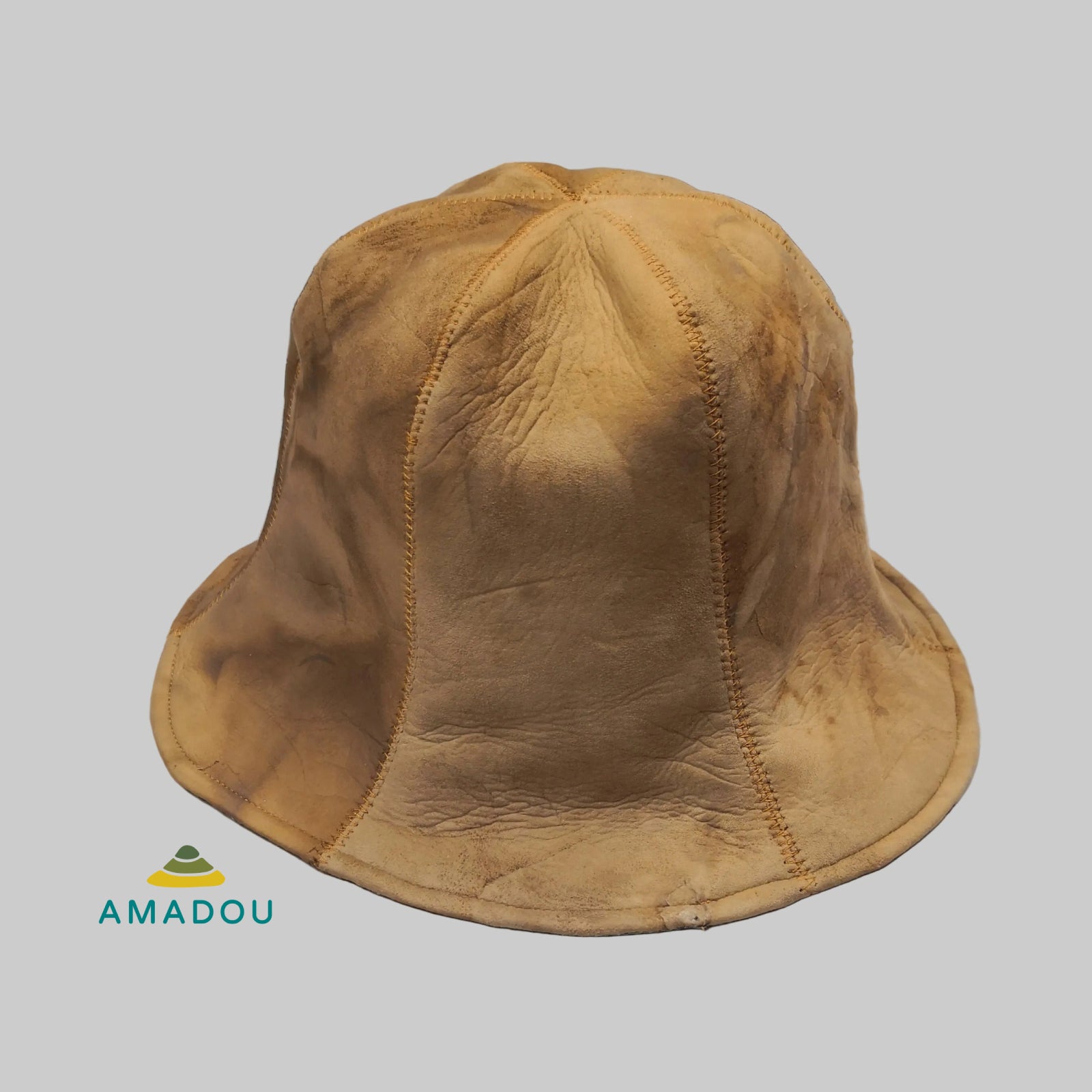
The Forager Hat / Amadou Legacy Hat ($195.00) is a good example of how amadou shows character over a season of wear.
Sun Protection and Ventilation in Real Festival Conditions
Sun protection and airflow are the two forces that decide whether a hat is wearable through a long afternoon, and they pull in opposite directions. A denser material blocks more UV radiation but traps heat; an open, breathable material vents heat but may transmit more light. Amadou and felt sit at different points on that spectrum, and understanding why helps you pick the right hat for the conditions you actually face.
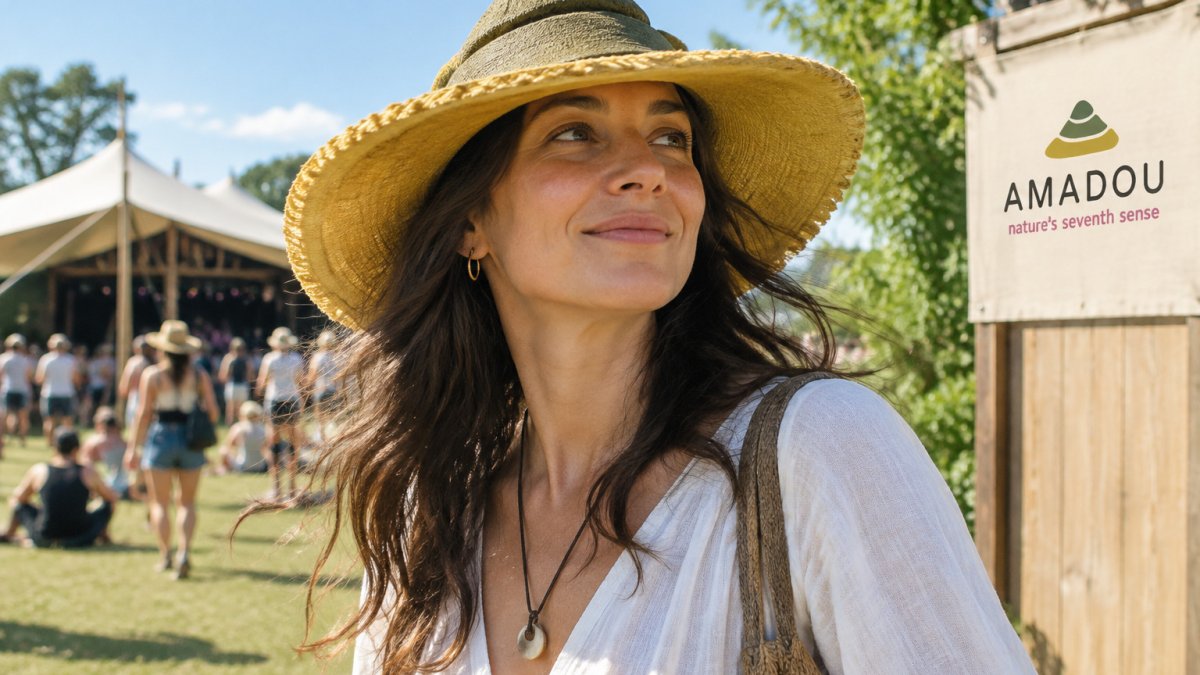
Amadou's advantage is structural. The Fomes fomentarius trama is a fibrous, felt-like network with natural voids between fibers, so air moves through the material rather than being blocked at the surface. In practice, that means heat generated at the scalp can escape instead of pooling under the crown. The effect is most noticeable on still, hot days when there is no breeze to carry heat away, the condition where a dense felt hat feels most oppressive. Amadou does not eliminate heat, but it delays the buildup that makes a hat feel like a lid.
Felt behaves like a windbreaker for the head. Wool or fur fibers are matted into a tight, continuous surface, so airflow through the material is minimal. That density is why felt hats feel warm quickly in direct sun and why they hold heat on cool evenings. For festival use, the trade-off is real: felt offers more consistent shade and a more opaque barrier, but it gives you fewer ways to dump heat once you are warm.
Brim geometry matters as much as material. A wider brim shades more of the face, ears, and neck, but the coverage depends on brim angle and crown height, not just width. A downturned brim throws shade onto the face; an upturned or flat brim exposes more skin even at the same width. Crown height affects how much hot air sits above the scalp, a taller crown gives heat more room to rise before it reaches the brim. When comparing hats, look at the actual brim dimensions and how the brim is shaped, not just the style name.
Ventilation has limits worth naming. No hat material replaces sunscreen on exposed skin, and a hat's shade does not protect the neck, shoulders, or hands. Amadou's breathability helps with heat, but no hat is a cooling system, and on a hot afternoon with no wind any hat will feel warm. Taking shade breaks and pairing a hat with a light layer are sensible ways to manage heat outdoors.
Breeze changes the calculation. A lightweight amadou hat moves with the wind, which can change how air reaches the head as the brim flexes. Felt stays put, which is an advantage in gusty conditions but a drawback when the air is hot and still. If your festival days are windy and exposed, felt's stability may matter more than its warmth; if they are hot and calm, amadou's airflow is the bigger comfort win.
For a broad brim with good airflow, the Big Rim Hat / Heritage Amadou Hat ($195.00) is the model we point most festival shoppers toward. Check the brim width and crown height against the shade you need, and treat ventilation as one factor among several rather than a guarantee.
Weight, Fit, and All-Day Stability
Weight is the difference you feel first and think about last. A hat that feels fine in the mirror can become a neck ache by hour four, and the gap between amadou and felt is large enough to change how you wear a hat all day. Amadou is a lightweight material, while felt carries the heft of matted fiber and a structured block. On a long festival day with hours of walking, standing, and looking up, that difference accumulates in the neck and shoulders.
Fit is about how the hat sits, not just how it looks. Amadou is flexible and molds slightly to the head, so a snug fit often settles in after a few wears; the material gives where it needs to. Felt holds its shape and will not give much, so getting the size right from the start matters more, a felt hat that is too tight stays too tight. Measure your head circumference before ordering, and if you are between sizes, size up in felt and consider a snug fit in amadou.
All-day stability is where the trade-off sharpens. In wind, a felt hat with a firm structure can feel more secure because the material resists deformation and the brim holds its angle. Amadou's lightness means it moves more in gusts, so a chin cord or a secure fit is worth considering if you plan to be outdoors in gusty conditions. The same flexibility that makes amadou comfortable in heat makes it less planted in wind, neither is wrong, but the right choice depends on your conditions.
Adjustable bands and internal sizing help bridge the gap. A hat with an adjustable inner band can be tightened for wind and loosened for heat, which matters more with a lightweight material. Check whether the hat has a sweatband or liner, since that affects both fit and how much moisture sits against your forehead. For wide-brim styles, the brim's stiffness also affects stability: a softer brim flexes in wind, while a stiffer brim catches it.
Watch out: a lightweight hat that fits loosely will lift in a gust and can be lost entirely at an exposed festival site. If you choose amadou for a windy event, plan for a chin cord or a deliberately snug fit rather than relying on the brim to stay put.
For most festival-goers, the practical rule is simple: prioritize weight and airflow if you will be in heat and calm air, and prioritize structure and wind resistance if you will be on exposed, gusty ground. The Fedora Amadou Hat ($185.00) gives a classic silhouette with the lighter feel of amadou, while the Bucket Amadou Hat ($220.00) suits a relaxed, casual festival style where all-day comfort matters most.
Mushroom Hat Care: Keeping Amadou Looking Its Best
Amadou is simple to care for, but it does respond to how you treat it.
Pricing and Value: Amadou Hat Options Side by Side
Price is a fair question, and the honest answer depends on how often you will wear the hat. Amadou hats in our range are priced as one-time purchases.
| Hat | Price (USD) | Best For |
|---|---|---|
| Fedora Amadou Hat | $185.00 | Classic fedora look |
| Big Rim Hat / Heritage Amadou Hat | $195.00 | Maximum shade and a wide brim |
| The Forager Hat / Amadou Legacy Hat | $195.00 | Everyday wear and aging character |
| Bucket Amadou Hat | $220.00 | Casual, relaxed festival style |
Price (USD)
Best for: wearers who spend long days outdoors and want a hat that stays comfortable. Skip if: you need a hat that holds a rigid, fully structured shape in strong wind.
The Paul Stamets Favorite Mushroom Hat ($195.00) is another option for shoppers drawn to the story behind a specific design.
Choosing Your Festival Hat and Your Next Step
For most festival-goers, amadou is the better match if comfort in heat and breeze matters most and you like a material that ages with character. Felt is the better match if you want a rigid shape and a traditional structured look. Decide by weighing how much you value weight, airflow and aging against shape retention.
If you are ready to choose, start with the fit you want, then pick a style. Explore the full Amadou collection to compare each hat, and pick the one that fits the way you plan to spend your days outside.
Frequently Asked Questions
What does a mushroom hat symbolize?
A mushroom hat is most often read as a nod to woodland and fairy-tale imagery, where toadstools signal forest life and whimsy. Amadou hats add a second layer: the material comes from Fomes fomentarius, a fungus long harvested in the Carpathian mountains and hand-shaped by artisans in Corund. Wearing one connects the look to a rare, ancient craft rather than a costume prop alone.
What materials are mushroom hats made from?
Mushroom hats are commonly made from felt, fabric, lace, straw, or wire-shaped brims. Amadou hats are made from the trama of the Fomes fomentarius fungus, which is velvety, breathable, and lightweight, and feels close to premium suede while remaining plant-based and chemical-free. Each piece is hand-shaped, so color and texture vary from hat to hat.
Are mushroom hats comfortable to wear at festivals?
Comfort depends on weight, ventilation, and fit. Amadou hats are described as lightweight and breathable, which helps in warm weather. Felt hats tend to hold heat more closely against the head. Check the brim size and the interior fit before a long day outdoors.
How do you care for a mushroom hat?
Store the hat away from direct sun when you are not wearing it, and avoid soaking it. Because amadou is a natural fungal material, brush off dust gently rather than washing it. Keep it dry and let it breathe between wears so the surface keeps its velvety feel and the shape holds.
