

Table of Contents
- Why Sustainable Vegan Alternatives to Leather Need a Closer Look
- Plant-Based Leather Environmental Impact: Beyond the Green Label
- Mushroom Leather Durability: How It Compares to Cowhide and Synthetics
- Material Breakdown: From Cactus and Pineapple to Mycelium and Cork
- What Premium Vegan Leather Alternative Brands Get Right
- The Amadou Difference: A Heritage Material That Outperforms
- End-of-Life and Repairability: What Most Articles Ignore
- How to Choose a Sustainable Vegan Alternative That Fits Your Life
- Frequently Asked Questions
Last Updated: September 9, 2026
Why Sustainable Vegan Alternatives to Leather Need a Closer Look
The market for sustainable vegan alternatives to leather has exploded, yet most shoppers decide based on marketing rather than material science. The gap between the green label and the actual product is wider than most guides admit: many popular vegan leathers are simply plastic with a botanical name attached.
Before you invest in any alternative, you need to understand what is actually in the material. Vegan alternatives to leather range from bio-based innovations like mycelium and pineapple leaf fiber to synthetic polymers that share more chemistry with a raincoat than with cowhide. The term "vegan" only tells you what is absent, not what is present.
Below, we break down the environmental claims, durability realities, and hidden plastic problem that should change how you evaluate every option on the market.
Plant-Based Leather Environmental Impact: Beyond the Green Label
Plant-based leather environmental impact is not automatically positive. It depends on the full lifecycle: cultivation, processing, durability, and disposal. A cactus leather that lasts two years and sheds microplastics may have a worse footprint than a well-tanned animal hide used for twenty.
The critical distinction is between bio-based content and biodegradability. A material can be derived from plants yet still contain significant synthetic polymers to achieve the flexibility and strength consumers expect. When those materials reach a landfill, they behave like plastic, not like the plant they came from.
The Hidden Plastic Problem in Many Vegan Leathers
Polyurethane and polyvinyl chloride dominate the vegan leather market. These synthetic polymers give many plant-based leathers durability and water resistance, but they also create the central contradiction: a product marketed as eco-friendly that is essentially plastic-coated fabric.
The textile industry has responded with new bio-based materials, but the transition is incomplete. Some manufacturers blend a small percentage of plant material with a polyurethane base and market the result as "plant-based." Scrutinize the material composition before accepting the sustainability story.
Mushroom Leather Durability: How It Compares to Cowhide and Synthetics
Mushroom leather durability depends entirely on which mushroom material and production method you choose. Mycelium-based leathers have made strides in tensile strength and abrasion resistance, but they are not a single material with a single performance profile.
Confusion comes from comparing finished products across price points. A mass-produced mycelium sheet bonded to a synthetic backing behaves very differently from a solid amadou sheet harvested from Fomes fomentarius. The former is a composite; the latter is a monolithic natural material with centuries of documented use.
When durability matters, look for three performance indicators: abrasion resistance, tensile strength, and how the material ages. Many synthetic alternatives degrade through hydrolysis or UV exposure within a few years. High-quality mushroom materials, by contrast, can develop a desirable patina.
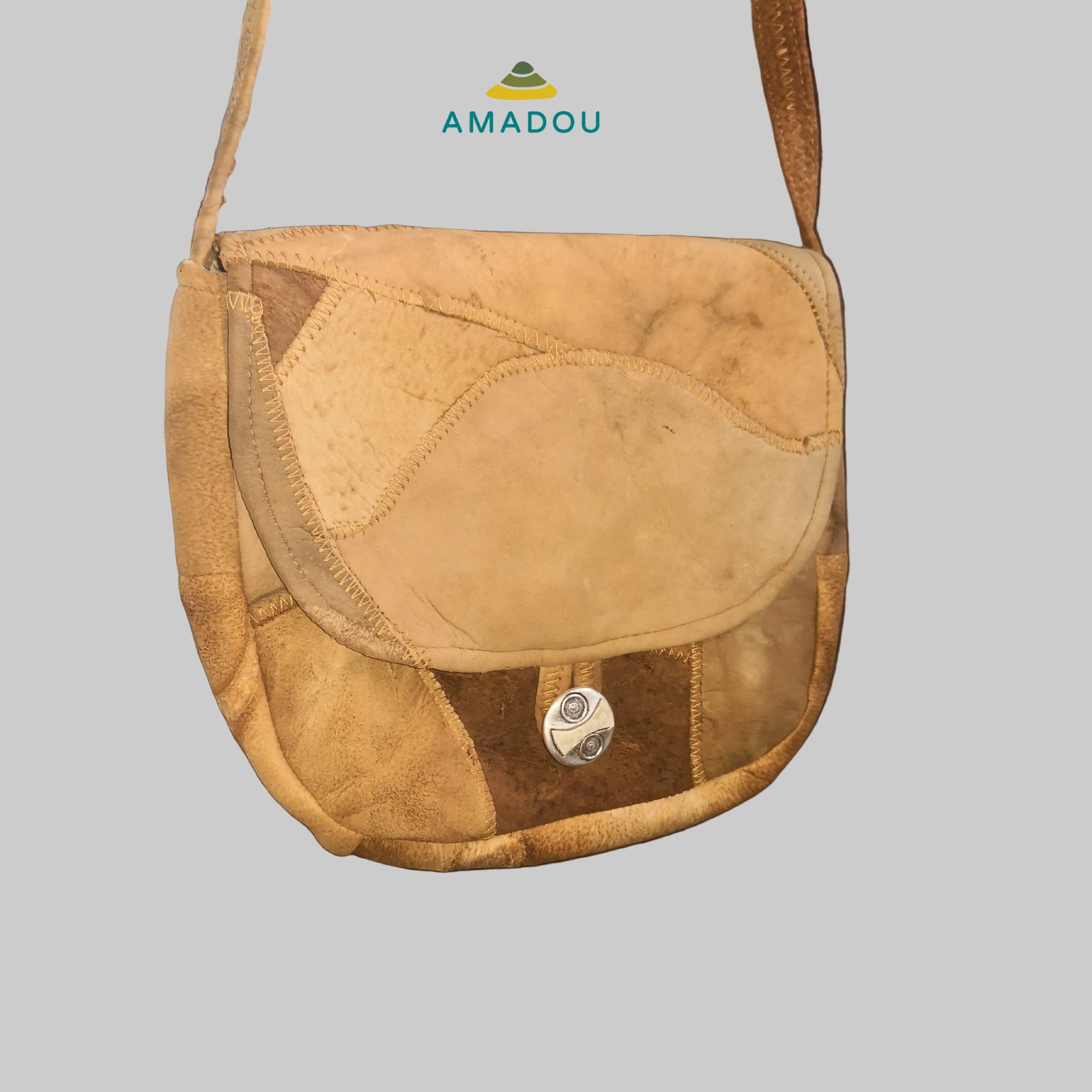
Velvety amadou mushroom leather shoulder bag, showing the natural texture and earthy brown tones, with a blurred forest background
Material Breakdown: From Cactus and Pineapple to Mycelium and Cork
The leading sustainable vegan alternatives to leather each bring distinct properties, but the real differentiator is not the plant source, it is the binder system that holds the material together. Most plant-based leathers are composites: a fiber or biomass layer coated or impregnated with a polymer to achieve flexibility, water resistance, and tensile strength. Understanding that binder is the key to evaluating any of these materials.
Cactus: The Binder Question
Cactus leather is made from mature nopal leaves that are dried, crushed, and mixed with a polyurethane binder before being rolled into sheets. Cactus content ranges from 30% to 60% by weight; the rest is often petroleum-based polyurethane, which provides the supple hand feel buyers expect. Some newer formulations use water-based polyurethane, reducing VOC emissions during production, but the end-of-life reality is unchanged: the material will not biodegrade in a landfill.
A common pattern among cactus leather producers is to highlight the low water footprint of cactus cultivation, a legitimate claim, since nopal requires minimal irrigation, while remaining vague about the percentage of bio-based content in the finished sheet. Ask for the material safety data sheet or the percentage of plant content by weight before accepting a sustainability claim.
Pineapple Leaf Fiber: Strong Fiber, Necessary Coating
Pineapple leaf fiber (PALF) is extracted from pineapple leaves, a byproduct of fruit cultivation. The fibers are strong, tensile tests commonly show 400 to 600 MPa, but hydrophilic, so manufacturers must coat the fiber mat with a polymer layer, typically polyurethane or bio-based polyester, for water resistance and surface durability.
PALF's environmental advantage is real: it valorizes agricultural waste. But the coating layer determines longevity and end-of-life behavior, a PALF product with a thick polyurethane coating will behave like plastic when discarded.
Mycelium: The Composition Spectrum
Mycelium materials span a wide spectrum. At one end are pure mycelium sheets grown in controlled environments, compressed, and treated with natural oils or waxes, genuinely bio-based and compostable. At the other end are mycelium powders or short fibers mixed with synthetic binders and pressed onto a polyester backing, containing only 20-40% mycelium by weight.
The performance difference is stark. Pure mycelium sheets have lower initial tensile strength but can be repaired and age with a patina. Composites often have better initial abrasion resistance but delaminate over time, and synthetic content prevents meaningful biodegradation. Check whether the manufacturer discloses mycelium percentage by weight and whether the backing is synthetic or natural.
Cork: The Quiet Exception
Cork is the rare material that requires no synthetic binder. Harvested from the bark of Quercus suber every nine years without harming the tree, cork is naturally waterproof, antimicrobial, and elastic. Its cellular structure contains suberin, a natural polymer providing water resistance without additional coating, making it one of the few genuinely monolithic natural leather alternatives.
Trade-offs exist: cork has a firmer hand feel than polyurethane-coated alternatives, and its color range is limited unless dyes are added. But for structured products, bags, belts, shoe soles, cork offers durability and end-of-life benefits most plant-based composites cannot match.
The Composition Disclosure Test
Apply the composition disclosure test: if the manufacturer does not publish the percentage of bio-based content by weight, binder chemistry, and backing fabric composition, treat the sustainability claim with skepticism. The FTC's Green Guides (16 CFR Part 260) require environmental claims be substantiated; a product labeled "plant-based" that is 60% polyurethane is arguably misleading.
Material |
Typical Bio-Based Content |
Binder System |
End-of-Life Reality |
|---|---|---|---|
Cactus |
30-60% |
Polyurethane (often petroleum-based) |
Landfill; does not biodegrade |
Pineapple leaf fiber |
40-70% fiber |
Polyurethane or bio-polyester coating |
Coating prevents biodegradation |
Mycelium (pure) |
90-100% |
Natural oils/waxes |
Compostable |
Mycelium (composite) |
20-40% |
Synthetic binder + polyester backing |
Landfill; partial degradation only |
Cork |
100% |
None (suberin is natural) |
Biodegradable; can be recycled into agglomerates |
Amadou |
100% |
None |
Fully biodegradable |
The table is a simplification but captures the central point: the plant source matters less than the binder. A 100% plant-derived material coated with petroleum-based polyurethane is not meaningfully more sustainable than synthetic leather at end of life. Materials that genuinely outperform either require no binder (cork, amadou) or use bio-based, compostable binders.
What Premium Vegan Leather Alternative Brands Get Right
Premium vegan leather alternative brands succeed by making verifiable claims about material composition, production chemistry, and supply chain transparency. The gap between a $50 bag and a $500 bag is rarely the source plant, it is the binder system quality, construction method, and willingness to disclose what is in the material.
The Composition Disclosure Standard
The most reliable signal of a premium brand is whether it publishes full material composition, including bio-based content percentage by weight and specific binder chemistry. Brands using water-based polyurethane reduce VOC emissions but rarely disclose this. A brand that points to a third-party test, such as ASTM D6866 for bio-based content, demonstrates rigor most competitors avoid.
ASTM D6866 measures the ratio of renewable to fossil carbon using radiocarbon analysis. A product testing at 30% bio-based content is very different from one at 90%. Premium brands commission and publish these tests; brands relying on vague terms like "contains plant material" are typically hiding a synthetic-heavy composition.
Chemical Additive Transparency
The textile industry uses chemical additives, plasticizers, stabilizers, flame retardants, pigments, rarely disclosed to consumers. Certain phthalate plasticizers in polyurethane coatings are restricted under CPSIA for children's products. A premium brand should confirm its materials comply with CPSIA and its supply chain avoids restricted substances.
The ZDHC program provides a framework for chemical management in textile and leather production. Brands that participate in ZDHC or comply with its Manufacturing Restricted Substances List (MRSL) demonstrate a commitment to chemical safety beyond marketing. Ask whether suppliers are ZDHC compliant; the answer separates genuine premium producers from those merely charging premium prices.
Construction Quality and Repairability
The material is only half the equation. A premium vegan leather product is built to be repaired, with accessible stitching, replaceable hardware, and construction that allows a cobbler or tailor to intervene. This is the opposite of fast fashion's disposable model, where glued products cannot be economically repaired.
Look for three construction signals:
- Stitched rather than glued seams, Stitched seams can be re-stitched when they fail; glued seams cannot be repaired without destroying the material.
- Replaceable hardware, Buckles, zippers, and snaps that can be sourced and replaced extend the life of a product significantly.
- Accessible material edges, If the material is folded over and glued at the edges, it will delaminate over time. If the edges are finished with stitching or a natural edge treatment, the product can be maintained.
The Amadou Production Standard
Amadou production contrasts with the composite model. Each sheet is harvested from the trama layer of Fomes fomentarius, then soaked, stretched, and hand-shaped without any synthetic binder, coating, or backing. Being 100% bio-based, it requires none of the chemical additives standard in polyurethane-coated alternatives. The process preserves the traditions of the Corund workshops, in eastern Transylvania, where master artisans have worked for generations.
The absence of synthetic binders has a practical consequence: amadou can be repaired with simple tools. A tear can be patched with natural fiber thread; a stain lifted with a damp cloth. There is no coating to crack, no backing to delaminate, no plastic to shed. This is the standard premium brands should be measured against, material honesty and repairability, not price point.
The Verification Gap
No federal standard currently defines what "vegan leather" or "plant-based leather" must contain. The FTC's Green Guides prohibit deceptive claims but do not establish a bio-based content threshold, so brands can legally market a product as "plant-based" when it contains only a small percentage of plant material.
Until a standard emerges, the burden falls on the buyer. The most reliable verification is a third-party test result, not a marketing page. Brands that invest in testing and publish results demonstrate honesty aligned with sustainable fashion values; brands that refuse to disclose composition data make a statement of their own.
The Amadou Difference: A Heritage Material That Outperforms
Amadou stands apart from other sustainable vegan alternatives to leather because it is not an engineered composite but a single, natural material harvested from Fomes fomentarius. Crafted from the mushroom's unique trama, amadou is 100% plant-based and chemical-free, processed through traditional boiling, stretching, and hand-shaping rather than synthetic binding.
The performance advantages are tangible. Amadou is naturally moisture-wicking, lightweight, and develops unique character as it ages, softening and molding to your use. It is also naturally absorbent, lifting oils and smudges from screens without chemicals.
Each piece is handcrafted in the Transylvanian village of Corund, preserving an ancient artisanal tradition that is on the verge of disappearing. Because every item is harvested from the wild and finished by master artisans, no two pieces are identical. The USDA Agricultural Research Service on natural fiber materials confirms that natural, unprocessed fibers often outperform synthetic composites in breathability and moisture management, which is exactly what makes amadou suitable for both fashion and function.
The Amadou bag - patchwork at $169.00 exemplifies this approach: fully handmade with zero chemicals, lined with soft linen, and built from organic mushroom leather that will age beautifully rather than degrade. For those seeking a heritage piece, the Amadou flat cap at $215.00 offers the same durability in a headpiece that is both lightweight and breathable.


End-of-Life and Repairability: What Most Articles Ignore
Most discussions of sustainable vegan alternatives to leather stop at purchase, ignoring what happens when the product wears out. End-of-life behavior determines the true environmental impact of any material.
A pure amadou product is 100% biodegradable, returning to the earth without leaving synthetic residue. This aligns with the principles of the Environmental Protection Agency's sustainable materials management framework, which emphasizes reducing environmental impacts across a product's entire lifecycle, not just its production. Contrast this with polyurethane-based vegan leathers, which persist in landfills for generations.
Repairability is the other forgotten factor. Synthetic vegan leathers cannot be economically repaired once the coating fails. Natural materials like amadou can be re-stitched, patched, and maintained, extending their useful life. Choosing a repairable material means participating in a circular economy rather than a linear one of extract, use, and discard.
How to Choose a Sustainable Vegan Alternative That Fits Your Life
Choosing the right sustainable vegan alternatives to leather requires matching material properties to your actual use case, not just your values. Ask what the product must withstand: daily commuting, outdoor adventure, or occasional evening wear.
For high-moisture environments, prioritize naturally water-resistant or moisture-wicking materials. For heavy daily use, durability and repairability outweigh initial softness. For those who value a connection to the making of the object, seek transparent, artisanal production chains you can verify.
The Amadou shoulder bag / legacy / big at $135.00 represents a balanced choice for daily use, offering natural moisture management in a weightless package. The Transylvanian forest charm bracelet at $25.00 provides an accessible entry point to experience the material before committing to a larger piece.

Amadou shoulder bag / legacy / big
The broader point is this: the Fashion Revolution's transparency index consistently shows that consumers are demanding more honesty from the fashion industry. That demand should extend to material composition, chemical additives, and end-of-life planning. A truly sustainable choice is one where the material, the manufacturing, and the longevity all align with your values.
Choosing sustainable vegan alternatives to leather is more complex than picking the first plant-based label you find. The best material is honest about its composition, built to last, and repairable rather than replaceable. Amadou meets all three criteria: 100% natural, chemical-free, and crafted to age beautifully. Explore the amadou collection and experience a sustainable alternative that performs as well as it looks, backed by a tradition that has endured for centuries.
Frequently Asked Questions
Is vegan leather environmentally friendly?
Not always. Many vegan leathers are made from polyurethane (PU) or polyvinyl chloride (PVC), which are synthetic polymers derived from fossil fuels. These materials do not biodegrade and can release toxins. Truly sustainable vegan alternatives to leather include plant-based options like mycelium, pineapple leaf fiber, and cork, which have a lower carbon footprint and are often biodegradable. Always check the material composition to avoid greenwashing.
How durable is mushroom leather compared to real leather?
Mushroom leather durability is impressive. Amadou, made from Fomes fomentarius, is naturally stretchable, abrasion-resistant, and water-resistant. Unlike some plant-based leathers that require a synthetic backing, amadou is a dense, durable material that ages beautifully. With proper care, an amadou bag or hat can age beautifully.
What is the best replacement for leather?
The best replacement depends on your priorities. For durability and a leather-like feel, mycelium-based materials like amadou are excellent. For a lightweight, textured option, pineapple leaf fiber (Piñatex) works well. Cactus leather is another strong contender. If you want a material that is plastic-free, biodegradable, and supports traditional craftsmanship, amadou offers a unique combination of performance and story.
How can you tell if vegan leather is sustainable or just plastic?
Check the label for synthetic polymers. If it lists polyurethane (PU) or polyvinyl chloride (PVC), it is plastic-based and won't biodegrade. Look for terms like 'bio-based,' 'plant-based,' or 'mycelium.' Also, ask about the tanning process. Amadou uses zero chemicals, making it 100% biodegradable. Truly sustainable materials will state their composition and end-of-life options clearly.