

Quick Summary
The best natural fiber bracelets for sensitive skin are undyed cotton, hemp, linen or silk pieces with a secure, low-profile closure and no synthetic elastic. The fiber sets the baseline, but dyes, coatings and stretch cords usually cause the irritation. Verify each component before buying.
- Undyed or naturally colored fiber leaves fewer unknowns for sensitive skin.
- Cotton absorbs sweat and holds moisture against the wrist, increasing friction.
- Silk is the smoothest option but is less durable and dislikes prolonged water.
- Stretch cords often contain synthetic rubber, a common trigger for contact dermatitis.
- Wear a new bracelet for a few hours and stop if redness or itching appears.
Table of Contents
- Why sensitive skin reacts to some bracelets and not others
- Natural fibers for sensitive skin: cotton, hemp, linen and silk compared
- Cotton bracelets for sensitive skin: here they work and where they fail
- Hypoallergenic bracelets: what the label does and does not promise
- How to check dyes, finishes and elastic components before you buy
- How to clean natural-fiber jewelry without losing its feel
- Choosing your first bracelet: starting with the amadou bracelet
- Frequently Asked Questions
Why sensitive skin reacts to some bracelets and not others
Last Updated: October 31, 2026
Sensitive skin rarely reacts to natural fiber bracelets because of the fiber alone. Most irritation comes from what touches the skin: a dye that bleeds, a metal clasp that releases nickel, or an elastic cord that traps sweat against the wrist for hours. Natural-fiber and mushroom-based accessories are one way to approach this question, and starting from the materials is a sound place to begin.
Contact dermatitis is an inflammatory skin reaction caused by direct contact with an irritant or allergen (Advancing the understanding of allergic contact dermatitis). It is the reaction most often blamed on jewelry, and it can appear on skin that has tolerated the same item for weeks. Timing, moisture and friction all change how a material behaves against the skin.
A common mistake is assuming a natural fiber is automatically gentle. Raw fiber can be coarse, and a bracelet that looks simple may hide a dyed core, a glued clasp or a stretch cord made from synthetic rubber. Check every component, not just the visible strand.
Natural fibers for sensitive skin: cotton, hemp, linen and silk compared
Most jewelry guides compare metals, but this one compares the fibers used in natural fiber bracelets. This one compares the fibers the keyword actually asks about, and then applies a disclosed rubric so the comparison produces a shortlist rather than a vibe. The four fibers below are the ones you will encounter in natural-fiber bracelets, and each behaves differently against sensitive skin.
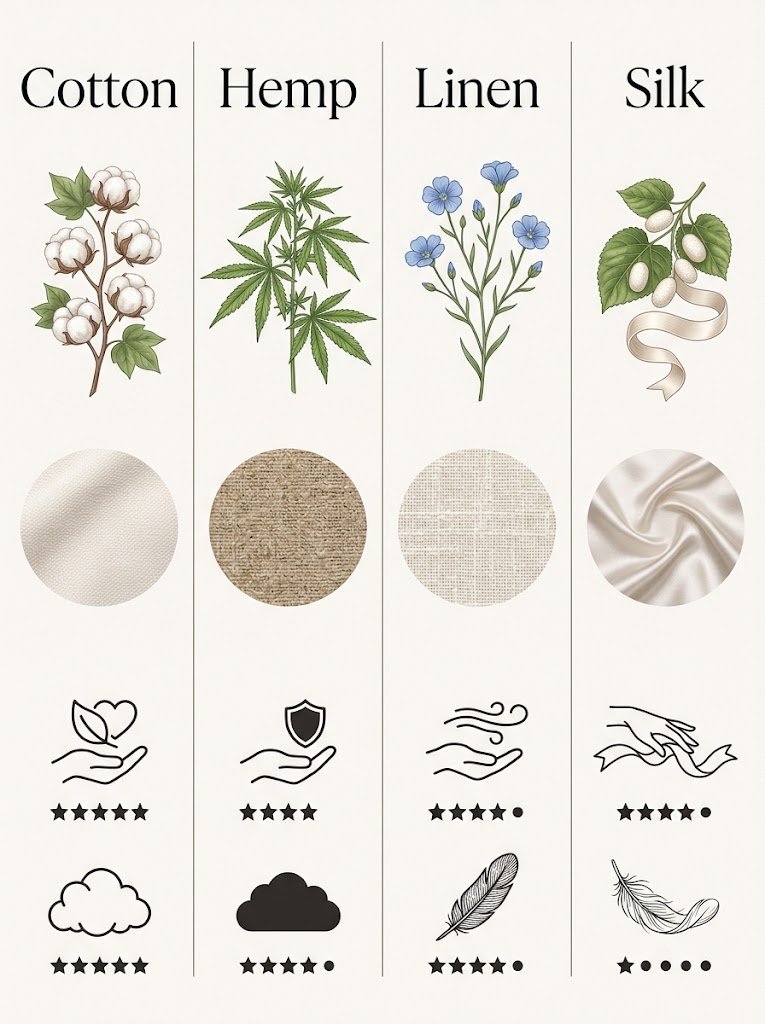
Cotton. Soft, breathable and widely available. The trade-off is moisture: cotton absorbs sweat and holds it against the wrist, which softens the skin and increases friction. Tight weaves and low-profile closures reduce the problem; loose weaves and frayed knots make it worse.
Hemp. Firmer and more abrasion-resistant than cotton, with a dry hand feel. Untreated hemp can be coarse at first and softens with wear. Hemp takes dye well but is often sold in its natural tan or brown state, which is an advantage for sensitive skin because it removes one variable. Hemp's stiffness means fit matters more: a hemp bracelet that is too tight will rub rather than drape.
Linen. Crisp, breathable and quick-drying relative to cotton. Linen's flax fiber is naturally smooth and low-lint, which helps if you react to loose fibers. It creases and can feel stiff until broken in, and it is less elastic than cotton, so closures need to be adjustable.
Silk. The smoothest and lowest-friction option, which makes it the most comfortable against reactive skin in dry conditions. Silk is less durable for daily wear, dislikes prolonged water exposure, and is often dyed in deep colors, so verify dye status. Silk cord and silk-wrapped bracelets are a good choice for office or sleep-adjacent wear, not for swimming or heavy exercise.
Selection rubric. To turn this comparison into a decision, score each candidate on five criteria: (1) fiber content stated as a percentage; (2) dye status, undyed, naturally colored, or dyed with a disclosed dye class; (3) skin-contact components, closure, cord, and any coating; (4) construction, weave tightness, knot security, and adjustability; (5) care, whether the maker gives washing and drying instructions. A bracelet that discloses all five is easier to trust than one that discloses none.
Natural-fiber bracelet options to consider. Based on the criteria above, these are reasonable starting points for sensitive skin:
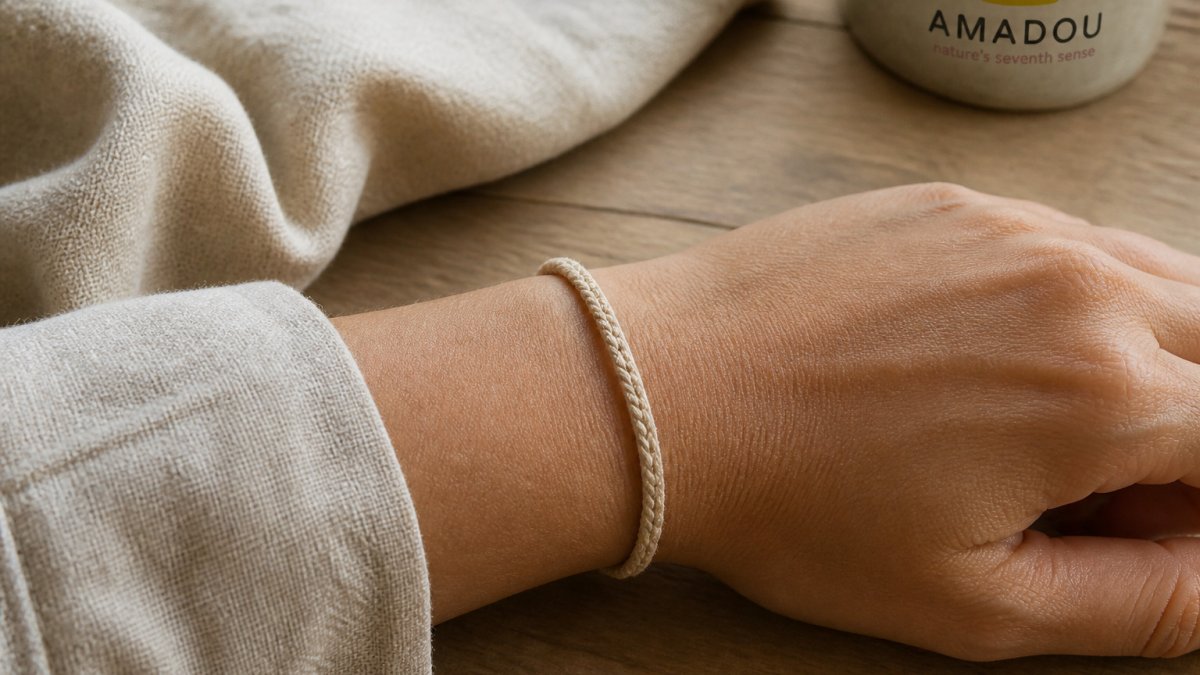
- The Amadou Bracelet ($25.00). Handmade from Amadou, a natural material from the Fomes fomentarius fungus. Its natural tone means it is not dyed, and the listing describes it as 100% natural and hypoallergenic.
The four fibers behave differently against sensitive skin, as summarised below.
Fiber |
Key trait |
Trade-off |
|---|---|---|
Cotton |
Soft, breathable, widely available |
Absorbs sweat, holds moisture against wrist |
Hemp |
Firm, abrasion-resistant, dry hand feel |
Coarse at first, needs careful fit |
Linen |
Crisp, smooth, low-lint, quick-drying |
Stiff until broken in, less elastic |
Silk |
Smoothest, lowest friction |
Less durable, dislikes prolonged water, verify dye |
Cotton bracelets for sensitive skin: here they work and where they fail
Cotton bracelets are generally soft and easy to adjust. They are soft, easy to adjust and usually inexpensive. Their weakness is moisture. Cotton absorbs sweat and stays damp, which can soften the skin over time and make friction worse.
Cotton also sheds and frays. Loose fibers can irritate the skin on their own, and a frayed knot may rub the same spot every day. Look for tight weaves and secure, low-profile closures.
Where cotton fails is during heat, exercise or swimming. A cotton bracelet worn through a workout tends to stay wet long after you have finished.
Hypoallergenic bracelets: what the label does and does not promise
"Hypoallergenic" is a marketing term, not a guarantee. Read what the product actually contains. For a broader comparison of materials and the claims made around them, see premium vegan leather alternative brands.
Transylvanian forest charm / Amadou Bracelet →
Look for specifics. A listing that names the fiber, the dye status and the closure material gives you something to check. A listing that says only "gentle on skin" does not.
Remember that allergies are individual. A material that suits most people may still cause a reaction in someone with a specific sensitivity. If irritation persists, stop wearing the item and consult a dermatologist.
How to check dyes, finishes and elastic components before you buy
Start with the dye. Bright or deep colors are more likely to contain dye residue that can transfer to skin, especially when damp. Undyed or naturally colored fiber gives you fewer unknowns.
Next, check the finish. Coatings, waxes and stiffeners can irritate sensitive skin. If a listing mentions a coating, ask what it is made from.
Then examine the elastic. Many bracelets use stretch cord that contains synthetic rubber, which is a common trigger for contact dermatitis. A knotted closure or a fabric tie avoids the issue.
Watch out: a bracelet can pass every check and still irritate skin if it is worn tight for long periods. Choose a fit that moves freely.
How to clean natural-fiber jewelry without losing its feel
Rinse natural-fiber bracelets in cool water after heavy sweating or swimming, then air dry them flat. Heat and wringing can distort the fiber and shorten its life.
Avoid harsh soaps, bleach and fabric softeners, which can leave residues that irritate skin. A drop of mild, fragrance-free soap is usually enough.
Store the bracelet somewhere dry and out of direct sunlight. Sunlight fades dye and can make natural fiber brittle over time.
Choosing your first bracelet: starting with the amadou bracelet
If you are choosing your first natural-fiber bracelet for sensitive skin, start with a simple construction and a material you can verify. The Transylvanian forest charm / Amadou Bracelet is one option to consider. It is handmade from Amadou, a natural material from the Fomes fomentarius fungus, and is listed at $25.00.

If you want to see more of the range before deciding, the Amadou Adornments collection shows the wider line of accessories.
Our recommendation is to wear any new bracelet for a few hours before committing to all-day wear. Check the skin afterward, and stop if redness or itching appears.
Frequently Asked Questions
What natural fibers are best for sensitive skin?
Cotton, linen and silk are generally the gentlest options for sensitive skin because they are soft and less likely to hold irritating residues when undyed or lightly finished. Hemp can feel coarser at first but softens with wear. Fiber alone does not guarantee comfort, since dyes, coatings and metal clasps can still trigger reactions. Test a new bracelet on a small patch of skin for a few hours before wearing it all day, and remove it if redness or itching develops.
Can natural-fiber bracelets irritate sensitive skin?
Yes. Natural fibers can irritate sensitive skin when the dye, finish, glue or elastic contains substances that bother you, or when sweat and friction stay trapped against the wrist. Some people with eczema or dermatitis find even soft natural fibers uncomfortable. If irritation appears, look at the components rather than only the fiber, and consider a bracelet with fewer treatments or a different closure.
Are cotton bracelets good for sensitive skin?
Cotton bracelets are often a good starting point for sensitive skin, especially undyed or naturally colored cotton. They are soft and breathable and are easy to find in simple constructions. The main risks are dyes and the knot or closure material. Check whether the color is fixed with a dye you know bothers you, and avoid bracelets with metal clasps if you react to nickel or other common metals.
How should I clean a natural-fiber bracelet?
Remove the bracelet before showering, swimming or heavy sweating when you can. Wipe it with a barely damp cloth and mild, fragrance-free soap, then let it air-dry flat away from direct heat. Avoid soaking, wringing hard, and harsh cleaners, which can fade dyes or weaken the fiber. Store it dry in a breathable pouch rather than a sealed plastic bag.
